Beyond the Desk: How AI is Reshaping South Africa's Frontline Workforce
AI is transforming South Africa's blue-collar sectors. Discover how local developers, businesses, and universities must adapt skills for an AI-augmented workfor
For years, conversations around Artificial Intelligence's impact on employment have largely focused on white-collar roles – analysts, writers, and administrative staff facing automation. However, a significant shift is underway: AI is rapidly extending its reach into blue-collar sectors, demanding a profound re-evaluation of skills development across South Africa's industrial landscape.
The March of Automation into Manual Labour
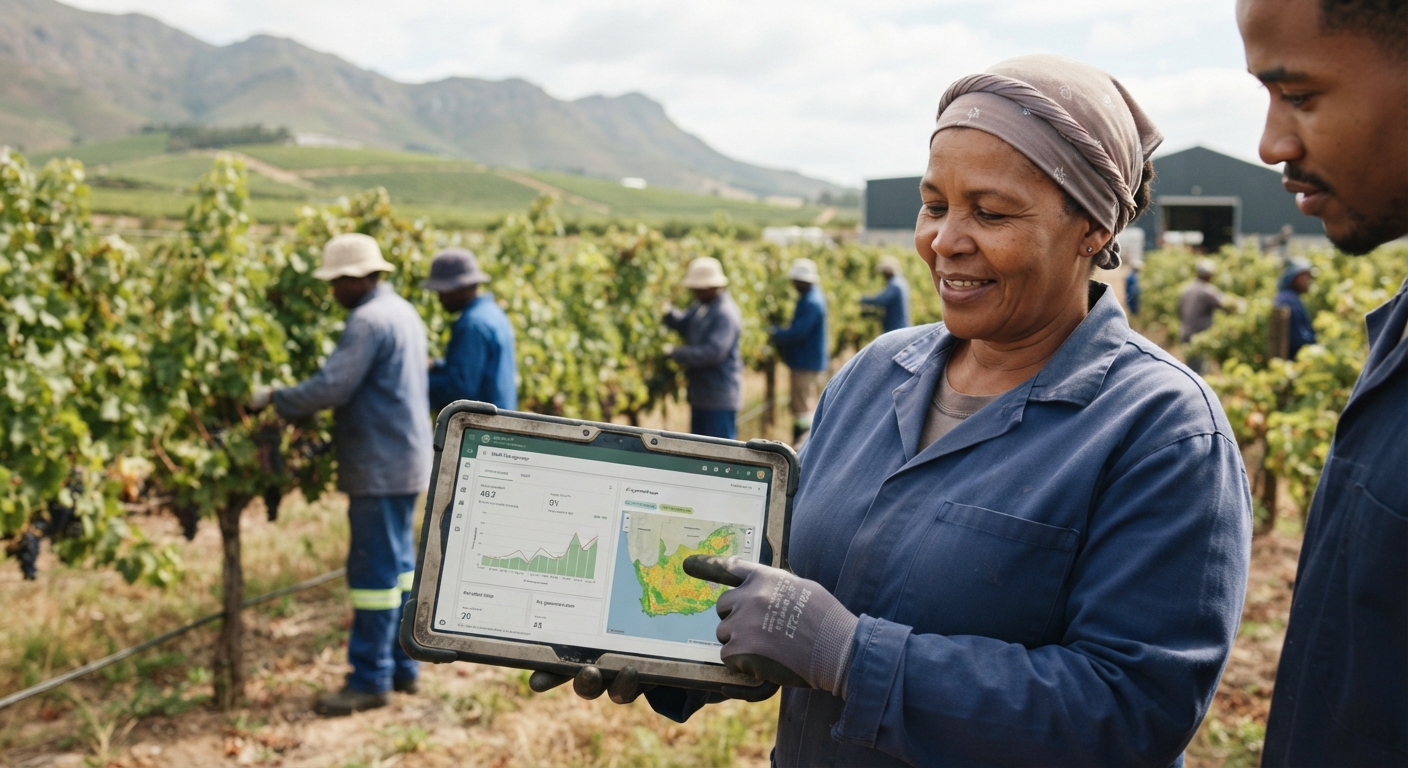
AI's increasing sophistication, coupled with advancements in robotics and sensory technologies, is transforming roles once considered immune to automation. From precision agriculture leveraging drones and AI-powered analytics to optimising logistics with intelligent routing systems and automated warehouses, and even enhancing safety and efficiency in mining through autonomous vehicles and predictive maintenance, AI is augmenting and, in some cases, replacing traditional manual tasks.
This isn't just about robots taking over; it's about intelligent systems working alongside humans, necessitating a workforce equipped with new competencies. Technicians will increasingly need to monitor, manage, and troubleshoot AI-driven machinery, interpret data generated by these systems, and adapt to dynamic, AI-assisted workflows. The demand for purely repetitive, physically demanding tasks will wane, while roles requiring critical thinking, problem-solving, and digital literacy will surge.
Rethinking Skills for a Smart Future
The traditional model of skills training, often focused on singular, manual proficiencies, is becoming insufficient. South Africa's vocational education and training (TVET) colleges, alongside industry-specific academies, must pivot towards curricula that integrate digital fluency, data analytics fundamentals, AI interaction skills, and adaptable problem-solving. Upskilling existing workers and pre-emptively training new entrants with these 'hybrid' skills is paramount to navigating this transformation successfully.
This proactive approach is not merely about preserving jobs but about creating new, more sophisticated ones that leverage human ingenuity alongside AI's computational power. It's about empowering South Africa's workforce to thrive in an era where technology is an indispensable partner.
The South Africa / Africa Angle
This paradigm shift holds particular significance for South Africa and the broader African continent, where blue-collar industries like mining, agriculture, manufacturing, and logistics form the backbone of many economies.
- For Developers: This presents an immense opportunity to design and deploy AI solutions tailored to local challenges – from optimising crop yields in diverse African climates to enhancing safety protocols in deep-level mining or streamlining supply chains across vast, often challenging, infrastructure. African AI developers are uniquely positioned to build ethical, context-aware AI tools that truly empower local workforces and drive industry transformation. There's a growing need for engineers and data scientists not just to build AI, but to integrate it seamlessly into existing industrial processes.
- For Businesses: Adopting AI is no longer a luxury but a strategic imperative for competitiveness and efficiency. South African companies, particularly in resource-intensive sectors, can leverage AI to reduce operational costs, improve productivity, and enhance worker safety. However, this requires significant investment in technology adoption, robust digital infrastructure, and critically, reskilling existing staff and fostering a culture of continuous learning. Ethical considerations around job displacement and ensuring an equitable transition are paramount.
- For Universities & Training Institutions: There is an urgent call to action. Universities, vocational colleges, and private training providers must collaboratively redesign curricula, incorporating AI literacy and practical data science skills into traditionally blue-collar oriented fields. This includes developing applied research programs focused on AI integration in local industries, fostering partnerships with businesses for internships and apprenticeships, and preparing graduates not just as AI creators, but as skilled operators, maintainers, and ethical decision-makers in an AI-augmented workplace.
Embracing this transformation with foresight and strategic investment in human capital will determine South Africa's ability to remain competitive and create sustainable, high-value employment in the digital age.
Source: Google News · South Africa AI